
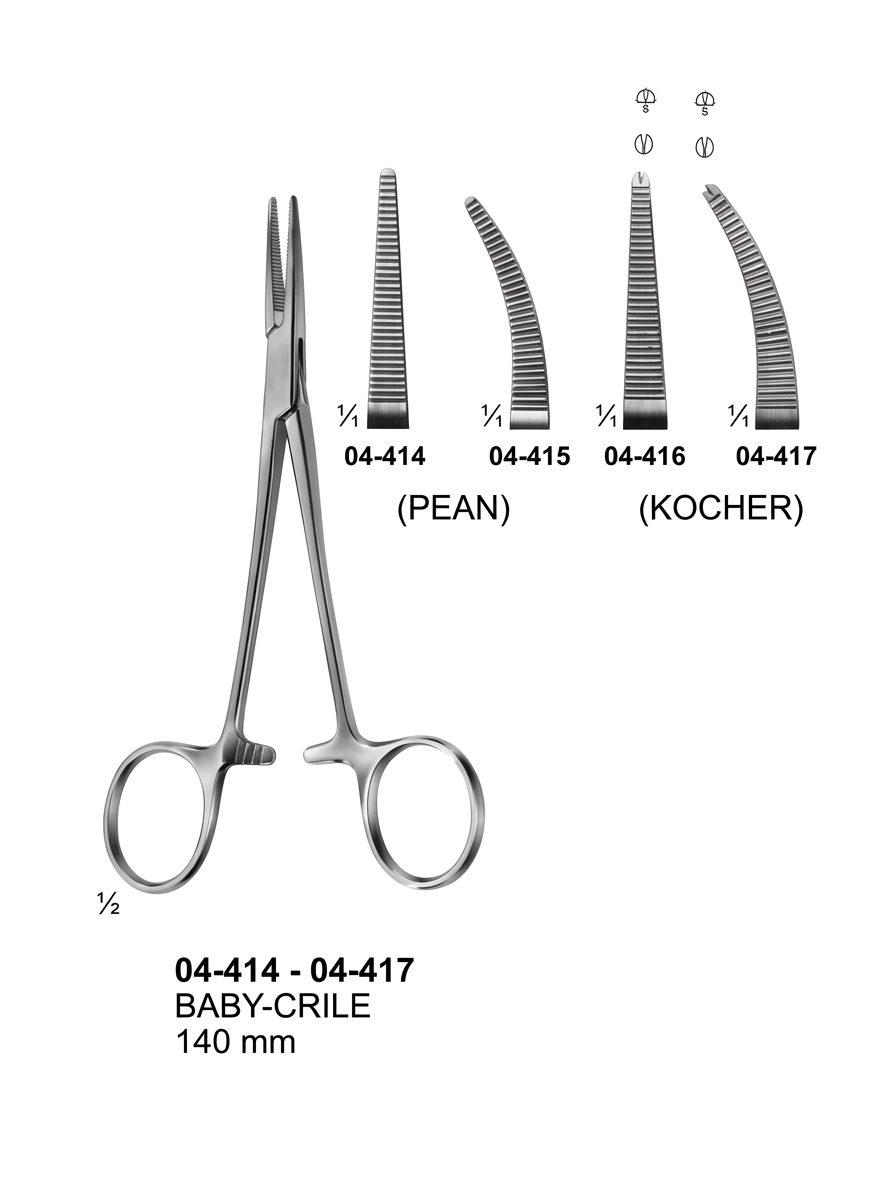
BABY CRILE Delicate Haemostatic Forceps
Intro Description Engineered for pediatric, plastic, and fine micro-surgical interventions, the SIRGIKAL 04-414–04-417 Baby Crile Delicate Haemostatic Forceps deliver pinpoint vessel occlusion, delicate tissue grasping, and absolute tactile control in confined operative fields. Featuring slender, finely tapered jaws (available in straight or curved configurations) and a lightweight box-lock construction, this specialized hemostat allows surgeons to clamp small blood vessels and handle fragile structures with minimal surrounding trauma. Crafted from certified medical-grade stainless steel with a secure multi-position ratchet locking mechanism, it ensures dependable durability, smooth jaw alignment, and long-lasting performance across rigorous hospital sterilization cycles.
Product Specifications
-
Item Code: 04-414 to 04-417
-
Material: Certified Medical-Grade Stainless Steel (ASTM F899 compliant)
-
Size: Standard Fine-Surgical Length (Baby Crile profile)
-
Finish: Satin (Anti-glare) / Mirror
Key Features
-
Delicate Transverse Serrated Jaws: Precision-machined gripping surfaces engineered for secure vessel clamping and minimal tissue crushing in restricted surgical sites.
-
Low-Profile Ratchet Mechanism: Provides adjustable, secure locking tension while maintaining smooth release control during meticulous interventions.
-
Lightweight Balanced Shank: Optimized weight distribution ensures ergonomic handling, reduced hand fatigue, and superior tactile feedback under magnification.
-
Autoclave-Resistant Passivation: Chemical citric passivation forms a dense chromium-oxide protective barrier, guaranteeing complete corrosion resistance across repeated high-temperature hospital sterilization cycles.
Usage
-
Pediatric & Plastic Surgery: Precise control and clamping of small blood vessels, fine capillaries, and delicate subcutaneous tissues.
-
General Micro-Dissection & Operating Theatre Utility: Essential hemostatic instrument relied upon by specialists requiring absolute precision and minimal tissue displacement in narrow operative fields.